The Definitive Country Almanac: The Rovessa Caravans — Part 1#
Kethra Almanac • Approved 19 September 2026 • drafted 18 September 2026 • Sections 1–4 (Sections 5–8 are in Part 2)
Status: approved. Briana approved the whole almanac on 19 September 2026 (the Almanac Approval Decision). Where this file calls something a proposal, read it as approved, except the open points that decision lists.
Status before approval:
- Established in earlier files, and taken as given here (proposals there too, unless the spine's canon table covers them):
- Trading families living aboard great sea-carriers, neutral carriers across the Line, with their home harbour at Saltline.
- About 6 million Rovessa live afloat.
- Carrier Houses, one family per great ship, with captains and crew-kin; the rank that matters is berth. Matters between Houses go to the Captains' Table.
- Linecant; the Line mark on their hulls; the Line-oath; burial at sea with the phosphorus repaid; Beaching; children apprenticed on deck by 10.
- The carriers are up to 1.4 km long, built in the Saltline yards, and carry about 70% of all sea cargo across the Line. The Houses arose in the AL 900s.
- Neutrality is their life.
- Internal split: established Houses protect their contracts, while younger captains challenge exclusionary deals.
- Proposal: everything else. It is built on the spine, the chapters and the other almanacs.
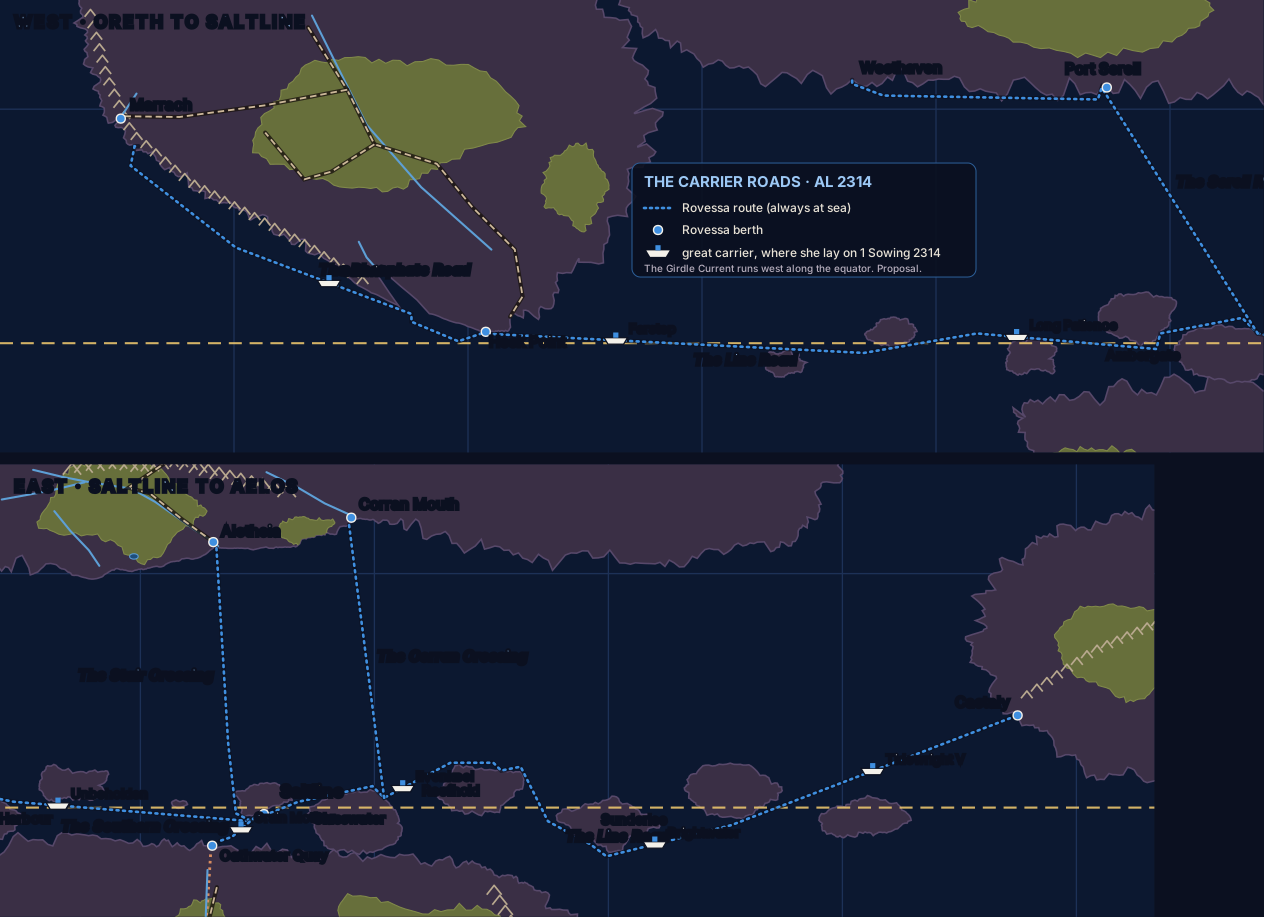
Reading note. The Rovessa are a nation without land. Their country is the Carrier Roads: the sea routes they sail, the berths they keep in other people's ports, and the decks they live on. This almanac answers every section for a people who are always moving. Every berth, tower and carrier named here is in the interactive Atlas, where the routes are drawn in blue. The carriers' positions are a snapshot taken on 1 Sowing AL 2314. The complete list is the generated Register of the Rovessa Caravans.
Section 1: National Overview & Identity#
Official Name & Etymology#
- Formal name: The Carrier Houses of the Line, sitting at the Captains' Table
- Short name: the Rovessa, or the Caravans
- Adjective: Rovessa. People: Rovessa; a single person is a Rovessa or road-kin.
Where the name comes from. Rovessa is Linecant, the sea-trade pidgin (Chapter IV). It joins rove (to travel round) with an old Line ending, -essa, meaning "the people of". The Rovessa are "the people who go round". The word was first written down in the Crown's treaty with the carrier Houses under Idris I (AL 900–927). The Crown's clerks spelled it four different ways, and the Rovessa have never cared which.
What others call them:
| Who | Name | Meaning |
|---|---|---|
| The capital (Selenne) | "the Rovessa", "the Caravans" | Respect, and a little envy |
| The frontier (Kethra) | "the Oath-ships" | Most frontier families swore their Line-oath on a Rovessa deck (Chapter V) |
| The Vardane Imperium | "the Carriers" | Strategic suppliers who refuse the loyalty the Imperium expects |
| The Line ports | "the Kin" | Half the ports' families have Rovessa kin |
| Themselves | "road-kin", "the Roads" | The people and the routes are the same thing |
Greeting: "Fair tide." Reply: "Fair tide, and a berth." (Chapter IV.)
National Symbols#
| Symbol | Description | Meaning |
|---|---|---|
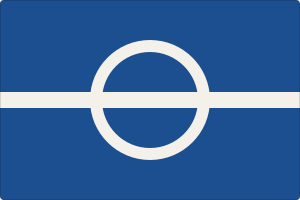
| Flag: "the Line Flag" | Deep blue; a white ring with a white bar through it | The Line mark (Chapter IV): the equator through the world. It is the only flag a carrier may fly. |
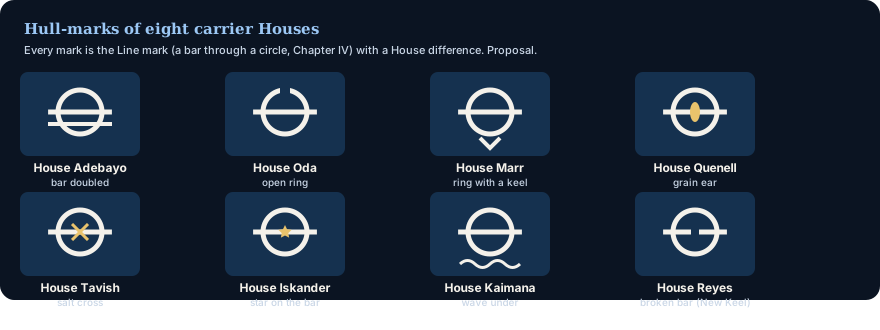
| Hull-marks | Every House paints the Line mark on its bow, with a House difference (see below) | Which House, and which ship |
| Motto | Every Port, No Flag | Neutrality |
| Anthem | The Road Goes West, a work song sung at the capstans | The Girdle Current carries them west |
| Colours | Deep blue and white | Sea and salt |
| Emblem | The Line mark | Also tattooed at the first crossing (Chapter IV) |
| Animal | The tidehound: a native sea hunter that follows the carriers | Never eaten, never harmed: bad luck |
Anthem, first verse (original lyrics, sung in Linecant and translated here):
The road goes west and the road comes round, Salt on the rope and no flag on the ground; Heave for the Line and the berth that you keep — The road goes west, and the sea is deep.
The State Profile#
| What it is | A family confederation (Chapter II) of 618 carrier Houses, one family per great ship. It has no territory. |
| Seat | The Captains' Table, Saltline. The hall is rented from the free port for one tally a year. |
| Helm of the Table | Captain Serafine of House Adebayo, of the Evenkeel, since 2309 (proposal) |
| Population | About 6.0 million afloat (the spine), plus about 1.4 million shore-kin ashore |
| Fleet | 618 great carriers (2,000–15,000 people each, up to 1.4 km long); about 4,100 feeders and tenders; about 60 lighters and haulers of the High Houses in orbit and the belt |
| Territory | None. A carrier's decks are Rovessa jurisdiction under the Deck Law that the Assembly recognised in 2152. Ashore, port law applies. |
| Language | Linecant at sea; Landspeech with clients (Chapter IV) |
| Money | Paid in crowns, keys and marks. Accounts are kept in tallies: one tally is the price of carrying one tonne of grain across the Line, fixed each year by the Standing Table. 1 tally = Cr 38 in AL 2314. |
| Calendar | The Crown Reckoning for contracts. Tide-reckoning by Pandia for everything that matters at sea. |
| Time | Ship time. Every carrier keeps the sun where it is. The Rovessa are the only people on Kethra with no time zone. |
| Standing | Observer at the Homeworld Assembly since 2150. Not a member state. |
Chronological Timeline#
| AL | Event |
|---|---|
| 0 | Landfall. The ships come down at the Thess mouth. |
| 41–about 400 | The Silence |
| 400s–800s | The Kindling. Coastal boats trade along the Stair and out to the Line Isles. |
| 900s | The carrier Houses arise (Chapter IV): families who build ships big enough to live on and never go home |
| about 914 | The first treaty between the carrier Houses and the Crown, under Idris I |
| 1180–1242 | The Salt Wars. The Houses carry for every side. The Line ports win free-port status. |
| 1244 | The First Sitting of the Captains' Table at Saltline. The Carriers' Compact makes neutrality law among the Houses. |
| 1390s | The first Refusal: the Table refuses to carry Crown troops to Oreth in the Oreth Crossing Wars |
| 1412 | The Tidewright of House Oda reaches Castaly: the Opening of Aelos (see the Ilyr Sanctum almanac) |
| 1620s | The Settler Crossings. Crown seeding charters south of the Line. Rovessa decks carry the settlers, and the Line-oath becomes the frontier's rite. |
| 1809 | The Table ends Rovessa carriage of exiles across the Line, two years before the Crown abolishes exile (1811). The Exile Runs remain the Rovessa's shame. |
| 1841 | The Refusal of 1841. In the Charter Wars the Table again refuses troops, but carries 200,000 refugees south and north. |
| 1877–1880 | The Wet Winter Flu. Quarantine at the Line. |
| 1960s | The first thorium-fission carriers, under Ilyr licence. Carriers grow past a kilometre. |
| 2092 | The High Houses: the first Rovessa lighters work between the Saltline Tether Yard and Vesper |
| 2143 | The Hesk Lift. In the Iron Winter, Rovessa carriers evacuate about 380,000 people from the Sentinel-held corridor coast. |
| 2150 | Observer at the Homeworld Assembly |
| 2152 | The Deck Law: the Assembly recognises Rovessa jurisdiction on Rovessa decks |
| 2279–2291 | The Corridor War. Carriers sail under the Grain Flag, with food and medicine for every side and no troops or munitions for any. |
| 2282 | The Marrach Charters. The Imperium takes three carriers at Marrach under "emergency charter", including the Saltwife. |
| 2283 | The Year of Empty Roads. The Table closes every Rovessa berth in the Imperium. No phosphate moves by Rovessa deck for a year. |
| 2284 | The Marrach Settlement. The Imperium releases the three carriers and pays in full. |
| 2285–2290 | The Lean Years. The Grain Mother and her sisters carry grain north. |
| 2291 | The Armistice of Saltline is signed on the Captains' Table itself, because it was the only neutral table on Kethra. The Unbeholden of House Reyes is launched the same year: the first of the New Keels. |
| 2304 | Linnea of House Reyes becomes the first New Keel Helm |
| 2309 | Serafine of House Adebayo wins the Helm back for the Old Houses |
| 2310 | The Great Mooring. The New Keels win 8 of 21 seats on the Standing Table. |
| 2314 | The present. The Crown and the Imperium both want standing charters: guaranteed capacity in a crisis. The New Keels want the Settled Routes opened to all Houses. The next Great Mooring is in 2317. |
Section 2: Geography & Environment#
Physical Geography: the Carrier Roads#
The Rovessa have no land. Their geography is the sea, and three facts rule it (Introduction):
| Fact | What it means for the Rovessa |
|---|---|
| The Girdle Current runs west along the equator | Every route is built around it. Westbound carriers ride it; eastbound carriers use the weaker counter-currents about 8° north and south of the equator. |
| Girdle storms stall over the Line Isles in the late summer of each hemisphere | The Rovessa read their signs better than any weather service (Introduction). The storm towers of Glasswater, Tern and Reefhold give days of warning. |
| The Line Isles are ringed by reefstone | Safe passages through the reefs are House knowledge, passed down and never written in full |
The routes (all drawn on the Atlas, all computed to stay at sea):
| Route | From – to | Carries |
|---|---|---|
| The Line Road | Castaly (Aelos) – Sunderlee – Reefhold – Glasswater – Saltline – Tern Harbour – Ambergate – Hesk (Oreth) | Everything. The spine of the Roads. |
| The Stair Crossing | Saltline – Aletheia | Grain, wine, passengers |
| The Corran Crossing | Glasswater – Corran Mouth | Goods for the eastern Crown |
| The Serell Road | Tern Harbour – Port Serell – Westhaven | The Lesser Crowns' trade; Cordale's banks |
| The Phosphate Road | Hesk – the Gulf of Serrin – Marrach | Oreth phosphate. The Imperium wants it guaranteed. |
| The Southern Crossing | Saltline – Oathwater Quay (Eldvang) | Settlers, grain, the frontier's goods. The Line-oath's road. |
Topography & Landforms#
| Place | What it is to the Rovessa |
|---|---|
| Saltline | Home harbour. Three islands and the anchorage of the Carrier Roads (Chapter III). The Floating Quarter lies off its south shore. |
| The Line Isles | Volcanic arcs ringed with reefstone. Free ports at Tern Harbour, Glasswater, Reefhold, Ambergate and Sunderlee. |
| Oathwater Quay | The landing on Eldvang's north coast where frontier families come ashore after their Line-oath |
| Castaly | The only foreign berth in the Ilyr Sanctum |
| The reef passages | Unmarked channels through the reefstone, known by House |
Climate & Weather#
- Tropical at sea on the Line Road: warm, wet and stormy in each hemisphere's late summer.
- Red nights at sea are brighter than ashore: there is nothing to block Hyperion. Old sailors say they can steer by it now.
- The rising sea (about 0.3 m a century, the spine) matters to the ports more than to the carriers. The Rovessa note, not unkindly, that they will float.
Flora & Fauna#
- Reefstone: vast, living native structures, like coral (Introduction). Burned for reefstone lime (Chapter III).
- Tidehounds follow the carriers. They are never harmed.
- Native sea life is mostly indigestible (Chapter I). The Rovessa eat Earthkin food from their garden decks and bought grain, with fish from stocked Earthkin shoals round the Line Isles.
- Kelp and iodine salt from Ambergate.
Natural Resources#
The Rovessa own no mines or fields. Their resources are the ones the relationship register names:
| Resource | What it means |
|---|---|
| Transport capacity | 618 great carriers: about 70% of sea cargo across the Line |
| Credit | The Rovessa Letter: a House's written promise to pay, honoured in every port |
| Port relationships | Berths in the ports of every major state |
| Local knowledge | Currents, storms, reef passages, and who to trust in which port |
Section 3: History & Chronology#
Before the Table#
As the Kindling spread along the Stair coast, boat families learned that the equator's current and the Line Isles' harbours made a road around the world. In the AL 900s some of them built ships big enough to live on, and stopped coming home. Each ship was a family, and each family was a House (Chapter II).
Founding & Sovereignty#
The Salt Wars (1180–1242) made the Houses rich and nearly destroyed them. They carried for everyone, and every side called them traitors. When the Line ports won their freedom in 1242, the Houses met at Saltline in 1244 and swore the Carriers' Compact:
- Carry for all who pay and keep port law.
- Carry no soldier under arms and no weapon of war. In war, carry food and medicine to every side, under the Grain Flag.
- Fly no flag but the Line.
- An attack on one carrier closes the attacker's berths to every carrier.
The fourth article is the Rovessa's only weapon. It has been used four times; the last was the Year of Empty Roads (2283).
Modern Era#
The Settler Crossings and the Exile Runs. From the 1620s Rovessa decks carried the settlers who seeded Eldvang, and the Line-oath sworn on those decks became the frontier's rite of passage. Until 1809 they also carried the Crown's exiles. The Rovessa remember both.
Engines and size. Thorium-fission carriers, under Ilyr licence, arrived in the 1960s. The largest now pass 1.4 km and carry 15,000 people.
The High Houses. From 2092 a few Houses took to the sky: lighters between the Saltline Tether Yard and Vesper's docks, and later haulers to the Cinderbelt. They are few (about 11,000 people), and the sea Houses treat them as eccentric cousins.
The Corridor War. The Imperium's "emergency charter" of three carriers at Marrach in 2282 was the thing the Rovessa fear most: a contract that quietly becomes requisition (the register). The Table closed every Imperial berth for a year. The carriers came back paid in full. In 2291 both sides signed the Armistice on the Captains' Table, because nowhere else was neutral.
The New Keels. The Unbeholden, launched in 2291, is the first of about 140 carriers built since the war by younger captains. They have no share in the Settled Routes: the old contracts, such as the Stair Crossing grain contract and the Phosphate Road, that the Old Houses have held for centuries. That is the register's "younger captains challenge exclusionary deals", and it is the argument of AL 2314.
Historical Rulers & Leaders#
Helms of the Captains' Table (complete)#
133 Helms since the First Sitting of 1244. The Helm is elected by the Standing Table for a five-year voyage and may be re-elected. (All proposal. Generated from a fixed seed with mixed name pools, so that no single Earth culture owns the Rovessa; see the naming principles.) House Adebayo has held the Helm for four of the last five voyages, which is exactly what the New Keels object to. The current Helm is in bold.
| Century | Helms, with the year each took the Helm |
|---|---|
| 1200s | Kofi of House Delacosta (1244) · Rafe of House Brannock (1254) · Bram of House Oda (1264) · Serafine of House Brannock (1269) · Solveig of House Fenwright (1279) · Ines of House Delacosta (1289) · Tomas of House Okoro (1299) |
| 1300s | Anouk of House Adebayo (1304) · Anouk of House Whitlow (1309) · Casimir of House Tavish (1314) · Rafe of House Okoro (1324) · Kofi of House Sundqvist (1329) · Kofi of House Oda (1334) · Tomas of House Holloway (1344) · Emeka of House Delacosta (1349) · Emeka of House Iskander (1354) · Casimir of House Sundqvist (1364) · Oskar of House Quenell (1369) · Oskar of House Tavish (1379) · Oskar of House Varga (1384) · Arash of House Holloway (1394) · Serafine of House Holloway (1399) |
| 1400s | Zuri of House Okoro (1409) · Hesper of House Sundqvist (1424) · Makoa of House Iskander (1434) · Tomas of House Adebayo (1444) · Rafe of House Reyes (1449) · Kofi of House Holloway (1454) · Casimir of House Whitlow (1459) · Bram of House Holloway (1464) · Arash of House Iskander (1479) · Bram of House Oda (1489) · Solveig of House Sundqvist (1499) |
| 1500s | Bram of House Okoro (1504) · Oda of House Adebayo (1514) · Oskar of House Sundqvist (1524) · Arash of House Reyes (1529) · Casimir of House Iskander (1544) · Teodora of House Fenwright (1559) · Arash of House Holloway (1564) · Arash of House Holloway (1569) · Arash of House Marr (1579) · Solveig of House Kaimana (1589) · Serafine of House Tavish (1594) · Solveig of House Quenell (1599) |
| 1600s | Oda of House Sundqvist (1604) · Kofi of House Oda (1609) · Linnea of House Fenwright (1619) · Makoa of House Tavish (1629) · Oskar of House Iskander (1639) · Mireva of House Delacosta (1644) · Anouk of House Holloway (1649) · Oskar of House Sundqvist (1654) · Yara of House Varga (1664) · Oskar of House Delacosta (1679) · Tomas of House Fenwright (1694) · Ilan of House Brannock (1699) |
| 1700s | Anouk of House Adebayo (1704) · Oda of House Tavish (1719) · Teodora of House Okoro (1729) · Teodora of House Tavish (1739) · Zuri of House Kaimana (1744) · Ines of House Whitlow (1749) · Solveig of House Brannock (1754) · Serafine of House Varga (1759) · Noor of House Marr (1764) · Mireva of House Iskander (1769) · Oda of House Adebayo (1774) · Casimir of House Adebayo (1779) · Noor of House Marr (1789) · Ilan of House Delacosta (1799) |
| 1800s | Casimir of House Brannock (1809) · Noor of House Varga (1819) · Solveig of House Whitlow (1829) · Ines of House Tavish (1839) · Emeka of House Brannock (1844) · Anouk of House Oda (1849) · Casimir of House Whitlow (1859) · Zuri of House Varga (1869) · Oda of House Tavish (1874) · Linnea of House Sundqvist (1884) · Oskar of House Delacosta (1894) |
| 1900s | Mireva of House Holloway (1909) · Makoa of House Okoro (1914) · Teodora of House Kaimana (1919) · Kofi of House Okoro (1929) · Kofi of House Oda (1939) · Makoa of House Kaimana (1944) · Teodora of House Quenell (1954) · Rafe of House Sundqvist (1964) · Ilan of House Iskander (1969) · Tavi of House Oda (1974) · Makoa of House Quenell (1979) · Makoa of House Varga (1989) · Tavi of House Okoro (1999) |
| 2000s | Serafine of House Iskander (2004) · Teodora of House Brannock (2014) · Kofi of House Oda (2024) · Teodora of House Reyes (2029) · Tomas of House Marr (2034) · Bram of House Kaimana (2039) · Solveig of House Oda (2049) · Zuri of House Delacosta (2059) · Linnea of House Brannock (2069) · Anouk of House Quenell (2079) · Tomas of House Quenell (2094) |
| 2100s | Casimir of House Oda (2104) · Yara of House Holloway (2114) · Marisol of House Marr (2124) · Teodora of House Kaimana (2129) · Hesper of House Quenell (2134) · Tavi of House Delacosta (2139) · Hesper of House Sundqvist (2144) · Hesper of House Adebayo (2154) · Solveig of House Fenwright (2169) · Casimir of House Okoro (2174) · Noor of House Marr (2184) · Bram of House Brannock (2189) · Tavi of House Reyes (2199) |
| 2200s | Oskar of House Whitlow (2209) · Ines of House Reyes (2219) · Arash of House Adebayo (2224) · Oda of House Reyes (2234) · Hesper of House Delacosta (2244) · Emeka of House Whitlow (2259) · Rafe of House Reyes (2269) · Solveig of House Iskander (2274) · Ilan of House Okoro (2279) · Ines of House Adebayo (2289) · Bram of House Adebayo (2294) · Anouk of House Adebayo (2299) |
| 2300s | Linnea of House Reyes (2304) · Serafine of House Adebayo (2309–) |
Figures every deck child knows#
| Figure | Dates | Why remembered |
|---|---|---|
| The captains of the First Sitting | 1244 | Swore the Carriers' Compact |
| Captain Oda of the Tidewright | 1412 | The Opening of Aelos. House Oda still sails a Tidewright, the fifth. |
| Ilan of House Okoro | Helm 2279–2289 | Closed the Imperial berths in the Year of Empty Roads, and was re-elected for it |
| Captain Maris Tavish | 2282 | Held the Saltwife at anchor for 400 days under Imperial charter, and brought her home with every one of her people |
| Linnea of House Reyes | Helm 2304–2309 | The first New Keel Helm |
Section 4: Demographics & Society#
Population Metrics#
| Metric | Value |
|---|---|
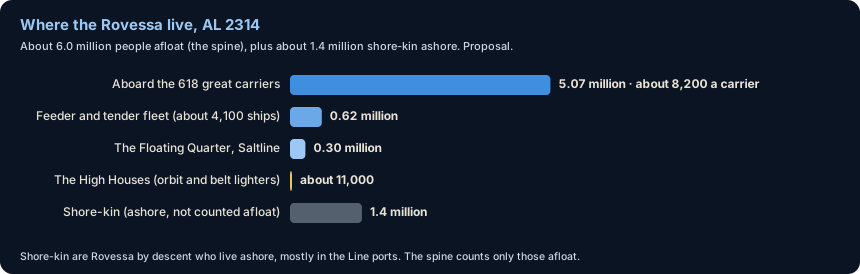
| Afloat | About 6.0 million (the spine): 5.07 million on the great carriers, 0.62 million on feeders and tenders, 0.30 million in the Floating Quarter, about 11,000 in the High Houses |
| Shore-kin | About 1.4 million Rovessa by descent who live ashore, mostly in the Line ports |
| Counted in | The Line Isles' 40 million (Chapter I), because the Floating Quarter and the Carrier Roads are Saltline waters |
| Median age | 31 |
| Fertility | 2.3 births per woman |
| Life expectancy | 72 K-yr (about 79 Earth years) |
Working. 5.07 + 0.62 + 0.30 + 0.011 = 6.00 million. 618 carriers × about 8,200 = 5.07 million.
Berth: rank aboard#
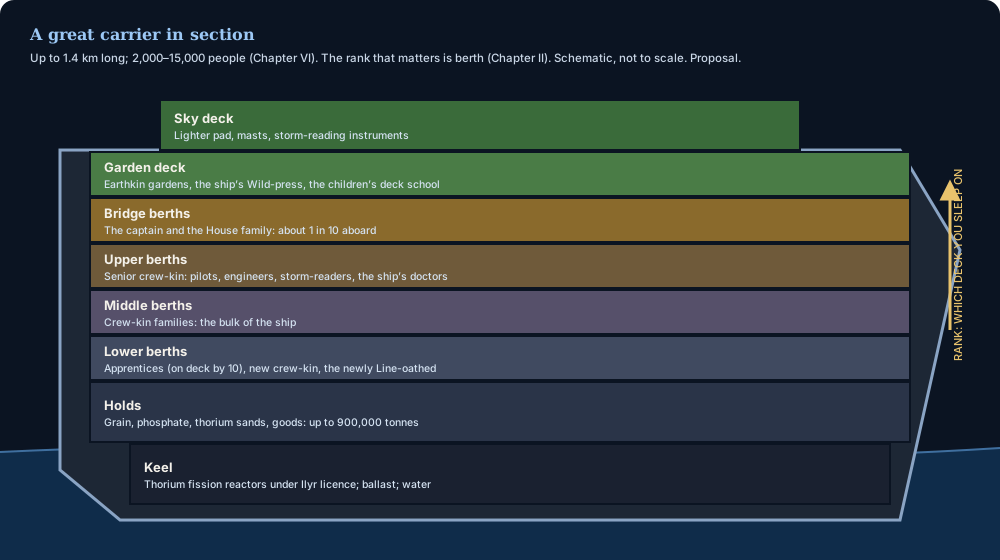
The rank that matters is berth: which deck you sleep on (Chapter II).
| Berth | Who | Share of the ship's earnings |
|---|---|---|
| Bridge berths | The captain and the House family, about 1 in 10 aboard | 5 shares each |
| Upper berths | Senior crew-kin: pilots, engineers, storm-readers, doctors | 3 shares |
| Middle berths | Crew-kin families: most of the ship | 2 shares |
| Lower berths | Apprentices, new crew-kin, the newly Line-oathed | 1 share |
| Deck children | Everyone under 10; raised by the whole ship (Chapter II) | none; fed by the ship |
Crew-kin are not born into the House, but they belong to the ship. A crew-kin family can rise to the upper berths in a generation. Only the House family sleeps on the bridge. Changing that is one of the New Keels' demands.
Language & Descent#
- Linecant, "a sea-trade pidgin with a large, shifting vocabulary. Every carrier House has its own words" (Chapter IV).
- Line-born: mixed ancestry, "the most varied population on Kethra" (Chapter I).
- Names: a given name and the House: Serafine of House Adebayo. Crew-kin take the ship's name as a surname while aboard: Maris of the Saltwife.
Religion & Belief Systems#
| Belief | Share |
|---|---|
| The Cantorate | 44% |
| The Wolf Rite (strongest on the Southern Crossing) | 18% |
| Plain Reckoners | 6% |
| No affiliation | 22% |
| Other, including current-lore (sailors' customs about the Girdle Current) | 10% |
Rites every Rovessa keeps, whatever they believe:
- The Line-oath, sworn on deck at the first crossing of the equator by sea. The person is marked with the Line mark. Crossing by air counts for nothing (Chapter V).
- Returned to the Line. The dead are buried at sea, the one accepted exception to the taboo on wasting the dead. Their phosphorus is weighed and repaid to a Line port farm by their House (Chapter V).
- Beaching, the worst punishment: set ashore at the next port and never taken aboard any carrier again (Chapter V).
Public Health#
- Every great carrier carries doctors and a sick bay. The largest have hospitals.
- Quarantine at the Line (Chapter I): carriers that bring sickness are held at anchor off the free ports.
- Deck injuries and drowning are the great killers of the young. Rustlung is rare at sea.
- Licensed therapies are bought through the Ilyr Legation. House Oda has a standing welcome at Castaly's clinics.
Education#
| Metric | Value |
|---|---|
| Literacy | 96% |
| School | The deck school, on the garden deck, from 5. Apprenticed on deck by 10 (Chapter II). |
| Higher learning | The Saltline School of Navigation; storm-readers train at the three storm towers |
Every deck child learns to swim before they can read, and to read a storm before they can write.